
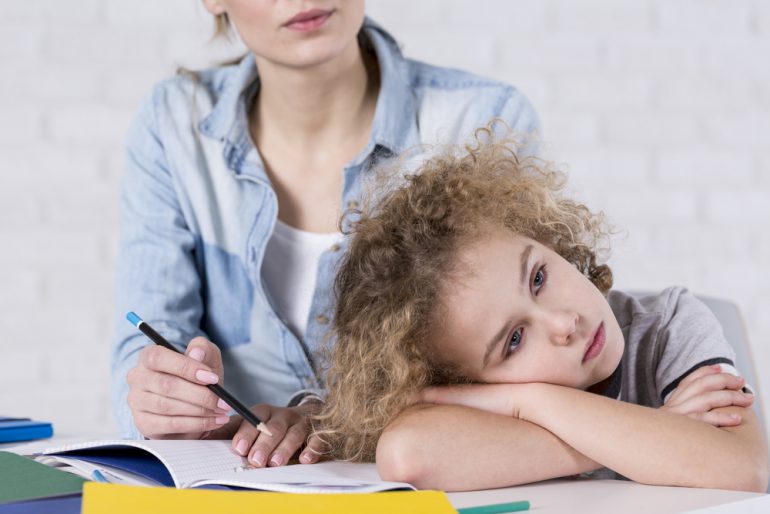

How does one know he/she has ADHD? Of course, for anyone who is concerned if you ever or perhaps child has ADHD, an important thing to do would be to seek professional care from a psychologist, a psychiatrist, or your primary care provider much like your pediatrician.
Your clinician or mental health provider uses many guidelines on the Diagnostic and Statistical Manual, Fifth Edition or even the DSM-5 from the American Psychiatric Association. ADHD manifests in persistent inattention and/or hyperactivity-impulsivity which affects your baby’s development and satisfaction in college. However, several signs and symptoms are experienced by many children, so it’s again essential to consult your healthcare and mental health provider if you feel your child to experience ADHD.
Inattention
Children with ADHD have trouble focusing and taking note of one activity. Inattention may present because the following, according to DSM-5:
- Careless mistakes in education work or some other activities — It is indicative which the child isn’t going to look closely at detail.
- Mind always seems to be elsewhere — Children like this usually do not listen when they are being spoken with, and oftentimes always are drifting off to another thought no matter if there isn’t any distraction present.
- Leaving tasks half finished — This means that the fact that child commences with interest, but immediately loses it afterward, leaving the game unfinished
- Avoiding schoolwork — Kids who avoid schoolwork or even housework indicate that they dislike doing things that require prolonged attention.
- Forgetfulness — These children often lose things such as pencils, books, toys, or cellphones.
- Easily distracted — Children that have ADHD can certainly be removed from focus within a conversation as well as activity
Hyperactivity-Impulsivity
Kids with ADHD always look like active and also moving, running collected from one of corner of the room an additional. Hyperactivity-Impulsivity may present as being the following:
- Fidgeting and squirming while in the seat
- Leaving the seat when least expected (e.g. in the center of class)
- Running about or climbing when inappropriate
- Being can not stay quiet in activities
- Acting that “driven by using a motor” (e.g. always on the move)
- Blurting out answers prior to body else finishes his question
- Impatience, difficulty waiting in line
- Interrupting others’ conversations
Professionals learn that if six of those symptoms can be as a result of less than half a year either way inattentiveness and hyperactivity-impulsivity, there’s every chance the kid has ADHD. These symptoms has to be seen in two settings or higher for example in education as well as at home. More importantly, ADHD doesn’t happen and also other disorders like panic attacks.
Since they are all manifestations in children, one wonders whether it is entirely possible that a grownup to find out whether he/she has ADHD. Children often carry ADHD up, albeit the signs and symptoms and signs slightly change. Adults are more liable to:
- Be restless as opposed to running or climbing about
- Turn in inaccurate work
- Have trouble multitasking
- Plan activities poorly
- Have trouble coping with stress
- Have poor time management planning skills
- Have frequent mood swings
- Be impulsive
Resources
https://www.cdc.gov/ncbddd/adhd/diagnosis.html
https://images.pearsonclinical.com/images/assets/basc-3/basc3resources/DSM5_DiagnosticCriteria_ADHD.pdf
https://www.healthline.com/health/adhd/signs#1
https://www.mayoclinic.org/diseases-conditions/adult-adhd/symptoms-causes/syc-20350878
https://www.webmd.com/add-adhd/guide/adhd-symptoms#1